1. Decorative Pruning (Shaping the Crown)
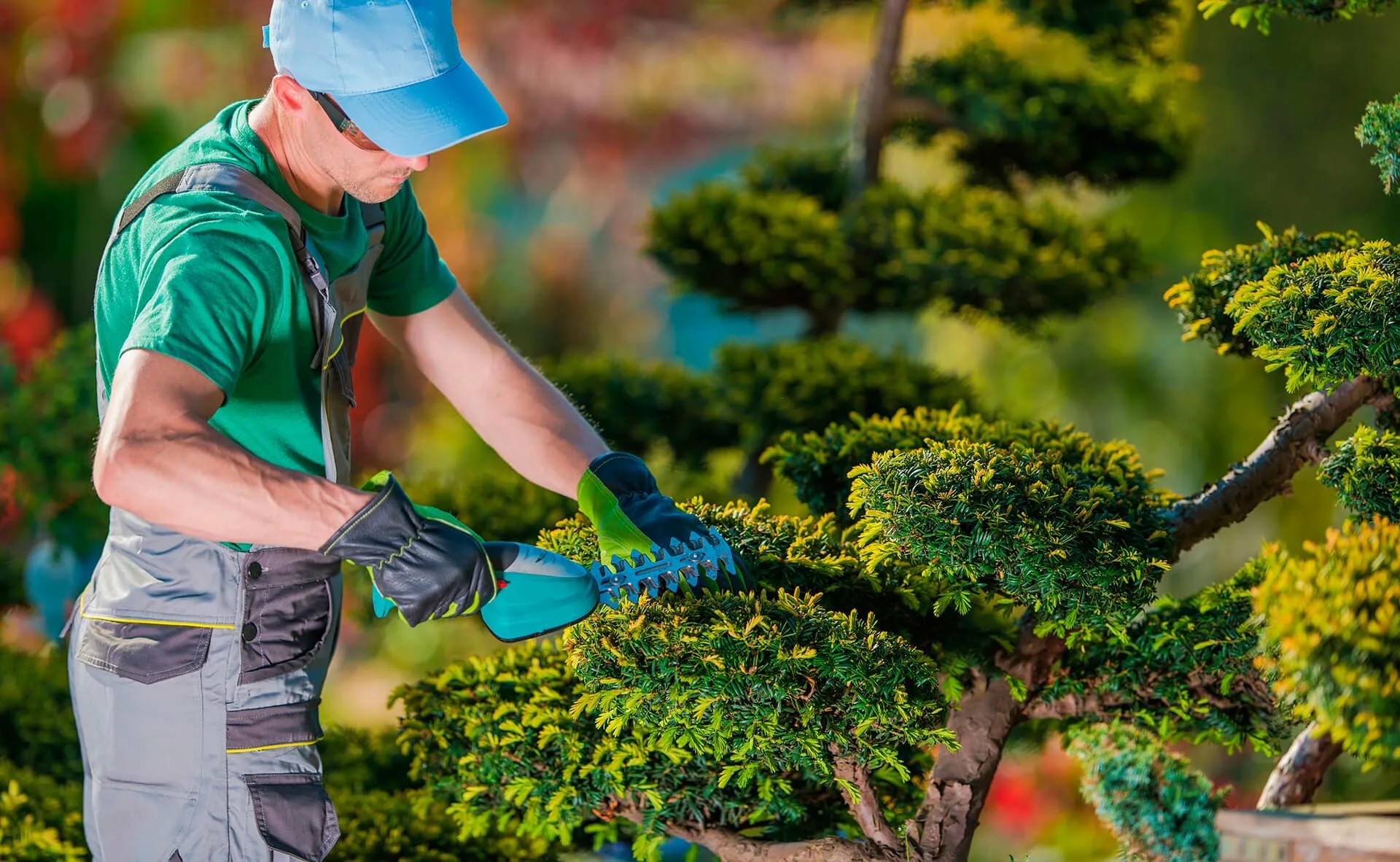
Decorative pruning is necessary to enhance the tree’s appearance. It involves removing unnecessary or unattractive branches and shaping the tree’s crown into a pleasing form. This is especially important for ornamental trees and shrubs in gardens or parks. The main goals of decorative pruning are:
-
Improving form: creating a harmonious, symmetrical crown. This is important for trees that play an aesthetic role in landscape design.
-
Highlighting plant features: emphasizing the tree’s distinctive features, such as curved branches, an interesting trunk structure, or unusual foliage.
-
Preserving decorative qualities: regular pruning helps trees maintain an attractive appearance over many years.
2. Essential Pruning (Reshaping the Tree)
Reshaping a tree is often required to maintain its health and proper growth. This process involves correcting improper forms or overly dense crowns, as well as removing damaged or diseased branches. Reshaping pruning helps:
-
Improve ventilation and lighting: removing excess branches allows light to penetrate the crown, and air to circulate freely. This reduces the likelihood of fungal diseases and improves overall growth conditions.
-
Prevent damage: removing branches that grow in undesirable directions helps prevent damage from wind, especially in large trees.
-
Correct growth: when a tree grows improperly or asymmetrically, reshaping helps restore its natural form and balance. This is especially important for trees that may begin leaning or growing in one direction over time.
3. Removing Deadwood
Deadwood pruning is an essential procedure aimed at removing dead, diseased, or damaged branches and trunks. It has several important aspects:
-
Disease prevention: dead or diseased branches provide an ideal environment for pests and fungi to thrive. Removing deadwood helps prevent the spread of these harmful organisms to healthy parts of the tree.
-
Safety enhancement: dry and weakened branches may become a safety hazard, as they could fall at any time and potentially injure people or damage property. Regularly removing deadwood minimizes this risk.
-
Encouraging tree recovery: removing dead or dying branches allows the tree to focus its resources on healthy new growth, aiding in its recovery.
4. Overall Benefits of Tree Pruning
Tree pruning offers many additional benefits:
-
Watering and energy conservation: regular pruning helps the tree use its resources more efficiently, directing them towards maintaining healthy branches rather than unnecessary ones.
-
Tree longevity: proper pruning can significantly extend the life of a tree. As trees age, they may begin to lose shape and vigor. Pruning helps keep them in good condition for many years.
-
Improved yield: for fruit trees, pruning is also important for increasing fruit production. Removing old, weak, or poorly positioned branches allows more nutrients to be directed towards the growth of new shoots and fruits.
Conclusion
Decorative and essential tree pruning, such as shaping, reshaping, and removing deadwood, are integral parts of tree care. These procedures not only maintain the aesthetic appeal of trees but also contribute to their health, safety, and longevity. Proper pruning helps trees grow correctly, prevents diseases, and enhances their ability to bear fruit, ensuring harmony in landscape design and creating a safe environment for people.


0 comments