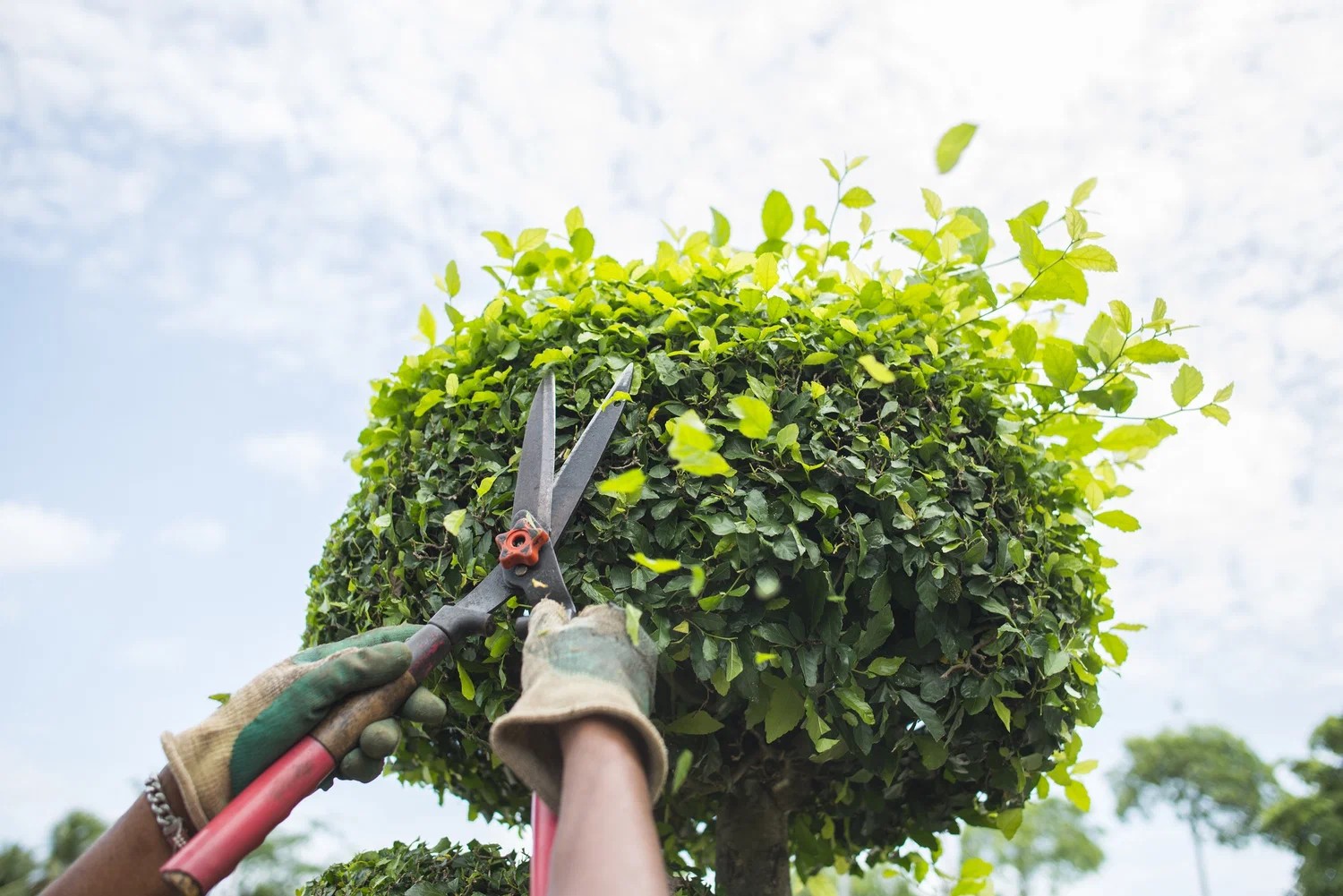

Decorative and mandatory pruning and wood formation. Lopping and cutting off dead tree.
In order to maintain and rejuvenate the decorativeness of a plant (tree or shrub), it requires pruning and shaping, which involves shortening branches. Almost all deciduous and coniferous plants need to be pruned. As a result, the plant is given the proper shape, which ensures adequate sunlight penetration and healing. Pruning terms should be taken into account when pruning.
Every year, dry, pest-damaged and micro and macromycete-infected branches are recorded in the tree trunk, which negatively affect the plant, since such branches are a source of infection for a healthy plant. For this reason, it is necessary to remove them, that is, prune them. There are different types of pruning such as formative, sanitary and rejuvenating.
The purpose of formative pruning is to create or maintain an artificial shape of the plant’s trunk. Changing the growth pattern, raising the trunk or limiting its height (air communications, building facades, etc.). In fast-growing species, formative pruning is carried out annually, in slow-growing species once every two years in the spring before the start of vegetation and in the fall.
The purpose of sanitary pruning of a tree is to remove diseased, withered, dried, broken, intertwined branches.
The purpose of rejuvenating pruning of a tree is to prune branches deeply to their basal part, which promotes the formation of young branches (sprouts) and the formation of new shoots. It is carried out during the physiological aging of the plant, when the annual growth ceases to occur, and when it loses its decorativeness.
During lopping, the crown of a tree or part of the crown is completely removed. A dead tree is a source of infection for healthy plants. When cutting down a dead tree special tools and techniques are required and the safety protection standard are fully followed.